02 / Field guide
Quick identification
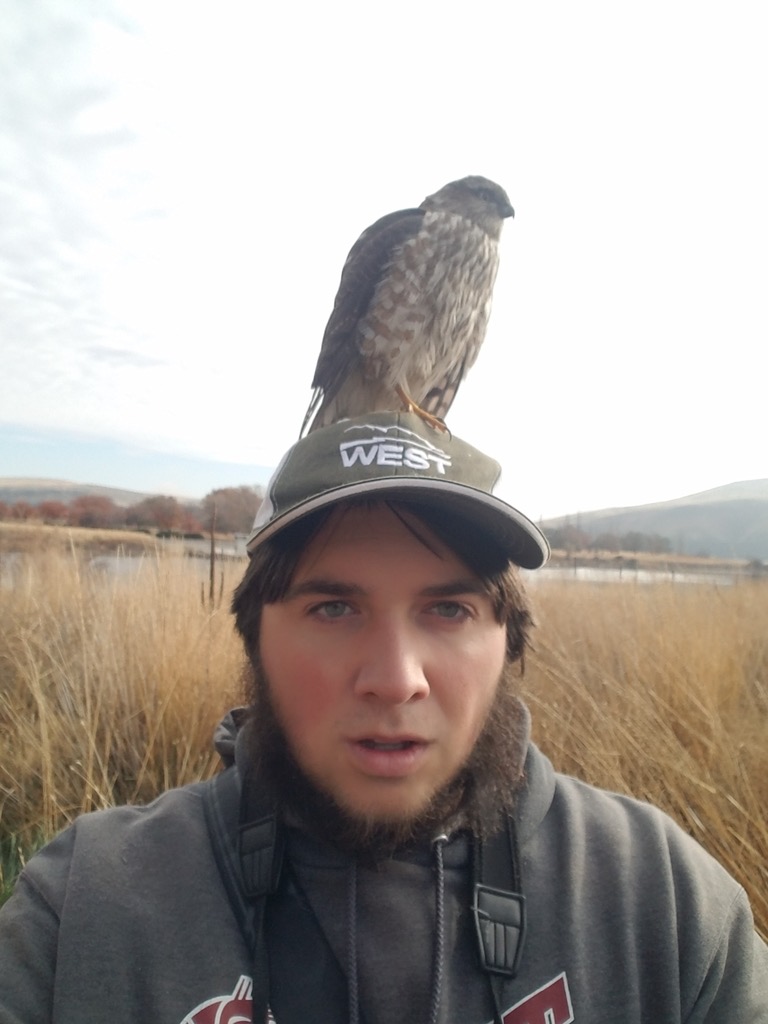
Small-headed and slim with short rounded wings and a long, usually square-tipped tail. Adults are blue-gray above with rufous barring; juveniles are brown and streaked.
Confirm the whole animal and context rather than a single color patch. Age, sex, molt, distance and light can all change apparent pattern.
03 / Field guide
Range & habitat
Occurs across much of North and Central America, breeding broadly in forest and shifting south or downslope in winter.
Coniferous, mixed and deciduous woodland, forest edges and occasionally towns with concentrations of small birds.
Use current observations to confirm broad seasonal presence, then check access with the land manager. A mapped record is not an invitation onto private or restricted ground.
04 / Field guide
Behavior
Uses rapid flap-flap-glide flight and sudden cover-based attacks on small birds. At migration lookouts it can pass quickly below eye level.
Behavior is useful evidence only when combined with structure and plumage or body pattern. Give the animal enough space to continue feeding, resting or traveling normally.
05 / Field guide
How to find it
Identify from several characters: small projecting head, narrow chest, thin legs and square tail. Sexes overlap in size with other accipiters, so size by itself is unreliable.
Keep the search habitat-led. Recent reports can focus effort, but they should not encourage crowding, trespass or repeated disturbance.
06 / Field guide
Similar species
Cooper’s Hawk has a larger projecting head, thicker legs and usually a rounded tail tip; Northern Goshawk is much larger and more powerful.
When a view is incomplete, record the characters you actually saw and leave room for uncertainty. Photographs, date, location and habitat make later review possible.
07 / Field guide
Photography in the field
Pre-focus near a likely opening, use a responsive tracking zone and 1/2000 second or faster for close passes. At feeders, protect prey birds by breaking up ambush cover rather than staging the hawk.
Settings are starting points. Subject welfare, legal access and a safe working distance take priority over focal length or frame-filling composition.
Research standard
Sources & field references
- Cornell Lab — Sharp-shinned Hawk
- Hawk Migration Association of North America
- Audubon Field Guide — Sharp-shinned Hawk
- iNaturalist source photograph taxon — Accipiter striatus
Access, fees, closures and regulations can change quickly. Confirm practical details with the managing agency before travel.