02 / Field guide
Quick identification
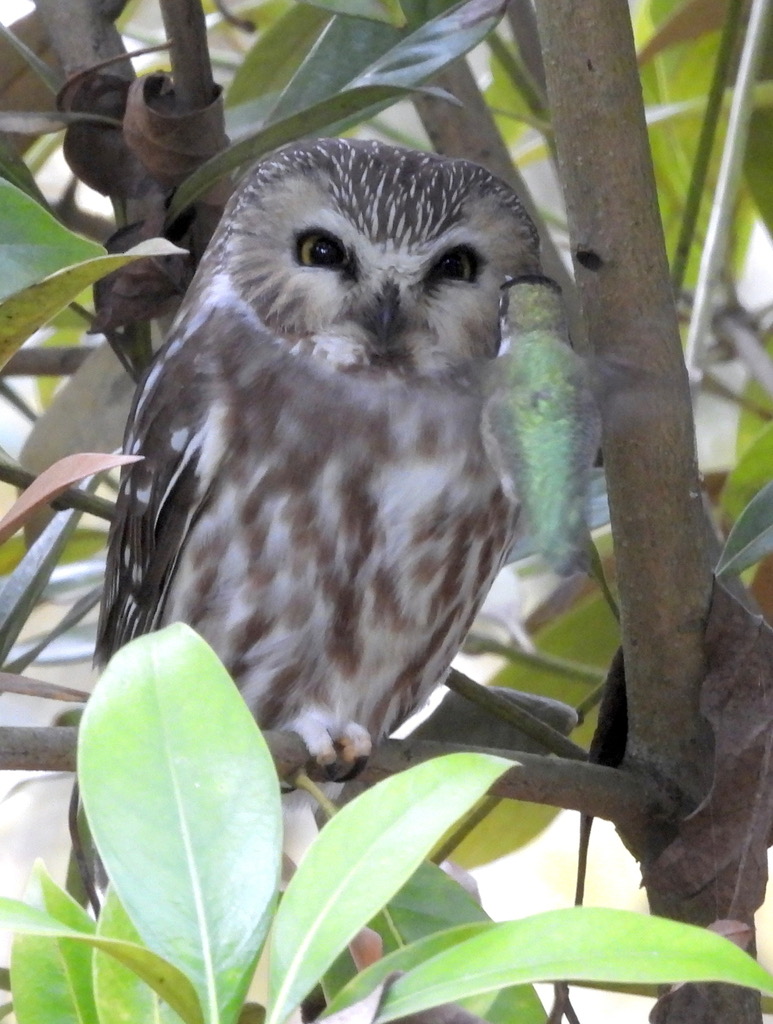
Males have an iridescent rose-red crown and gorget that can look black without direct light; females show green upperparts and variable red flecks on the throat.
Confirm the whole animal and context rather than a single color patch. Age, sex, molt, distance and light can all change apparent pattern.
03 / Field guide
Range & habitat
Resident along much of the Pacific Coast and increasingly widespread inland across the West and Southwest.
Chaparral, oak woodland, desert washes, gardens and urban plantings with nectar and insect resources.
Use current observations to confirm broad seasonal presence, then check access with the land manager. A mapped record is not an invitation onto private or restricted ground.
04 / Field guide
Behavior
Males perform steep display dives that end with a loud tail-produced sound. Both sexes defend nectar sources and catch small insects in the air.
Behavior is useful evidence only when combined with structure and plumage or body pattern. Give the animal enough space to continue feeding, resting or traveling normally.
05 / Field guide
How to find it
Listen for scratchy calls and watch exposed song perches. A dark gorget can flash bright with a single change of angle, so confirm bill, tail and overall pattern.
Keep the search habitat-led. Recent reports can focus effort, but they should not encourage crowding, trespass or repeated disturbance.
06 / Field guide
Similar species
Costa’s Hummingbird male has a purple flared gorget and crown; female Black-chinned and Costa’s require attention to tail, shape and regional likelihood.
When a view is incomplete, record the characters you actually saw and leave room for uncertainty. Photographs, date, location and habitat make later review possible.
07 / Field guide
Photography in the field
For hovering flight begin around 1/2500–1/4000 second, use a small tracking area and position for a distant clean background. Avoid moving feeders or flowers to manipulate a bird repeatedly.
Settings are starting points. Subject welfare, legal access and a safe working distance take priority over focal length or frame-filling composition.
Research standard
Sources & field references
- Cornell Lab — Anna’s Hummingbird
- Audubon Field Guide — Anna’s Hummingbird
- eBird — Anna’s Hummingbird
- iNaturalist source photograph taxon — Calypte anna
Access, fees, closures and regulations can change quickly. Confirm practical details with the managing agency before travel.