02 / Field guide
Quick identification
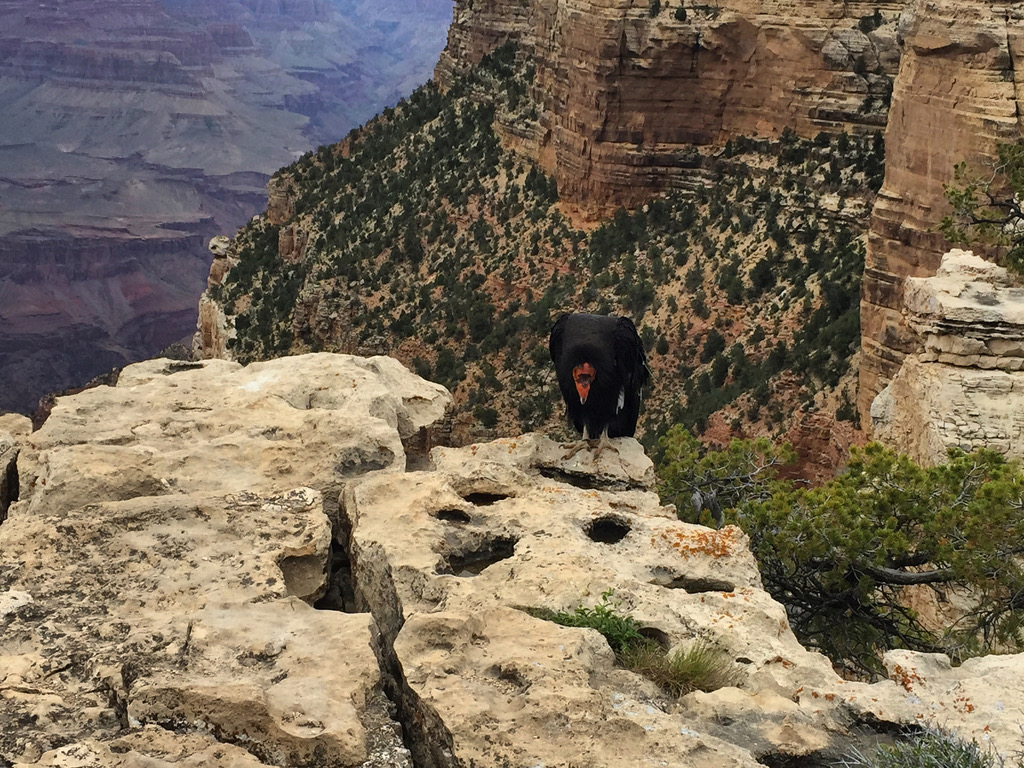
Enormous size, long broad wings and white triangular panels on the underside distinguish adults. Young birds have mottled rather than clean white underwing coverts and dark heads.
Confirm the whole animal and context rather than a single color patch. Age, sex, molt, distance and light can all change apparent pattern.
03 / Field guide
Range & habitat
Reintroduced populations occur in California, northern Arizona and southern Utah, with a separate effort in Baja California; locations and access change with the recovery program.
Cliffs, open mountain country, desert canyons and broad foraging landscapes with strong thermal lift.
Use current observations to confirm broad seasonal presence, then check access with the land manager. A mapped record is not an invitation onto private or restricted ground.
04 / Field guide
Behavior
Condors soar for long periods with very few wingbeats, often circling high with Turkey Vultures and ravens. They feed only on carrion and may travel great distances between roost and feeding areas.
Behavior is useful evidence only when combined with structure and plumage or body pattern. Give the animal enough space to continue feeding, resting or traveling normally.
05 / Field guide
How to find it
Use established public viewpoints and current agency updates. Scan ridgelines after the ground warms, compare every large soaring bird, and look for wing tags only after shape and flight style suggest condor.
Keep the search habitat-led. Recent reports can focus effort, but they should not encourage crowding, trespass or repeated disturbance.
06 / Field guide
Similar species
Turkey Vulture is much smaller, holds its wings in a dihedral and rocks in flight; Golden Eagle has a smaller head, different tail and lacks the condor’s white underwing panels.
When a view is incomplete, record the characters you actually saw and leave room for uncertainty. Photographs, date, location and habitat make later review possible.
07 / Field guide
Photography in the field
A 400–600mm equivalent is useful for distant flight. Begin near 1/1600–1/2500 second with continuous tracking and protect pale underwing panels. Never approach a perched group or broadcast locations that could interfere with management.
Settings are starting points. Subject welfare, legal access and a safe working distance take priority over focal length or frame-filling composition.
Research standard
Sources & field references
- U.S. Fish & Wildlife Service — California Condor recovery
- Cornell Lab — California Condor
- National Park Service — Condor identification and conservation
- iNaturalist source photograph taxon — Gymnogyps californianus
Access, fees, closures and regulations can change quickly. Confirm practical details with the managing agency before travel.