02 / Field guide
Quick identification
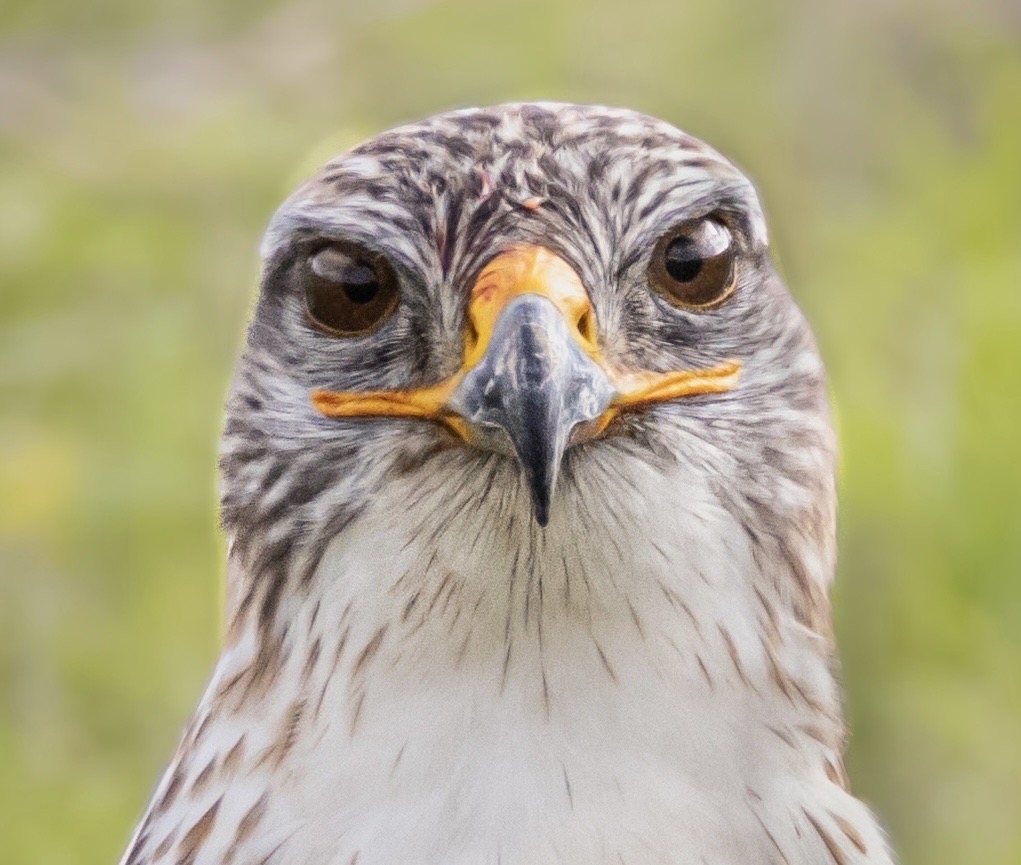
Light adults have a pale head and underparts, rusty shoulders and feathered legs that form a dark V against the body in flight. Dark morphs are mostly chocolate below but retain pale flight feathers.
Confirm the whole animal and context rather than a single color patch. Age, sex, molt, distance and light can all change apparent pattern.
03 / Field guide
Range & habitat
Breeds across the western interior of North America and shifts south into the Great Plains, Southwest and Mexico in winter.
Prairie, sagebrush, desert grassland and agricultural openings with ground squirrels, prairie dogs and other medium-sized prey.
Use current observations to confirm broad seasonal presence, then check access with the land manager. A mapped record is not an invitation onto private or restricted ground.
04 / Field guide
Behavior
Often hunts from poles, low rises or the ground and soars with broad wings held level. It may remain near prairie-dog colonies or other prey concentrations.
Behavior is useful evidence only when combined with structure and plumage or body pattern. Give the animal enough space to continue feeding, resting or traveling normally.
05 / Field guide
How to find it
Winter road surveys in open country are productive, but stop only at legal pullouts. Judge structure, tail and underwing pattern before using color morph.
Keep the search habitat-led. Recent reports can focus effort, but they should not encourage crowding, trespass or repeated disturbance.
06 / Field guide
Similar species
Red-tailed Hawk usually shows a belly band and dark patagial marks; Rough-legged Hawk has a different wrist and tail pattern and smaller bill.
When a view is incomplete, record the characters you actually saw and leave room for uncertainty. Photographs, date, location and habitat make later review possible.
07 / Field guide
Photography in the field
Use the vehicle as a distant blind where legal, remain off private land and avoid flushing a grounded bird. Flight settings near 1/2000 second preserve wing detail.
Settings are starting points. Subject welfare, legal access and a safe working distance take priority over focal length or frame-filling composition.
Research standard
Sources & field references
- Cornell Lab — Ferruginous Hawk
- U.S. Fish & Wildlife Service — Ferruginous Hawk species profile
- Audubon Field Guide — Ferruginous Hawk
- iNaturalist source photograph taxon — Buteo regalis
Access, fees, closures and regulations can change quickly. Confirm practical details with the managing agency before travel.