02 / Field guide
Quick identification
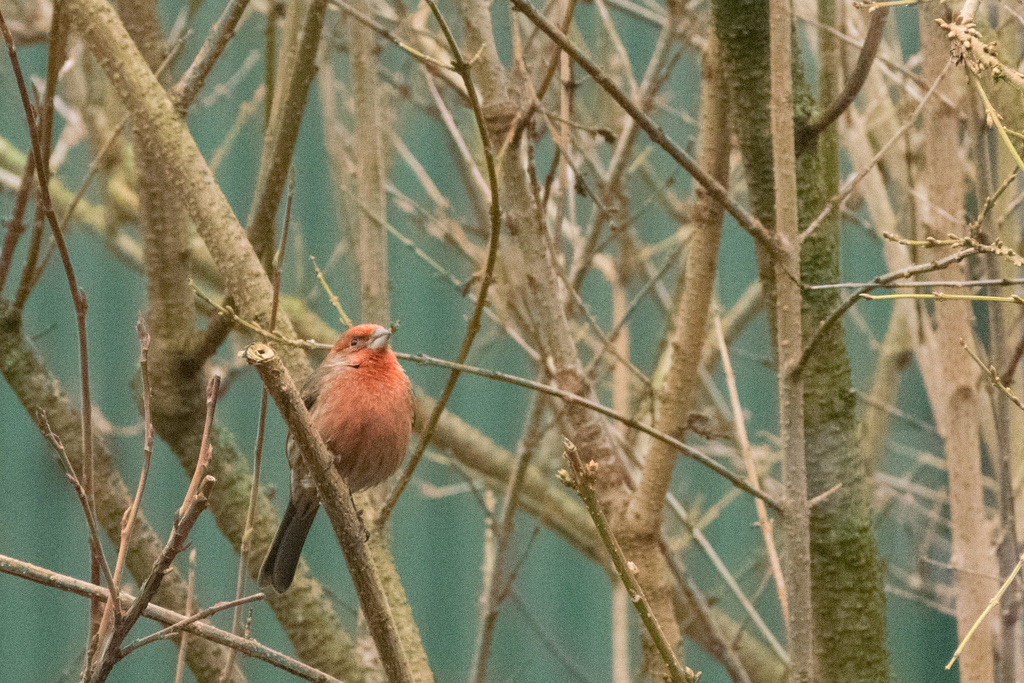
Adult males have streaked brown flanks and colored head, breast and rump. The color may range from pale yellow through orange to red because carotenoid pigments acquired during molt vary with diet and physiology.
Confirm the whole animal and context rather than a single color patch. Age, sex, molt, distance and light can all change apparent pattern.
03 / Field guide
Range & habitat
Now widespread across most of the United States, southern Canada and Mexico after expansion from its western native range.
Towns, farms, desert edges, open woodland and feeders, wherever seed and nesting ledges or vegetation are available.
Use current observations to confirm broad seasonal presence, then check access with the land manager. A mapped record is not an invitation onto private or restricted ground.
04 / Field guide
Behavior
Social outside the nesting season, House Finches feed on seeds and fruit and often gather at elevated perches near feeders.
Behavior is useful evidence only when combined with structure and plumage or body pattern. Give the animal enough space to continue feeding, resting or traveling normally.
05 / Field guide
How to find it
Compare birds in neutral light and photograph the breast, crown, rump and streaked flanks. Color is continuous, not a set of separate morph species, and can look warmer near sunrise or sunset.
Keep the search habitat-led. Recent reports can focus effort, but they should not encourage crowding, trespass or repeated disturbance.
06 / Field guide
Similar species
Purple Finch males are more extensively raspberry-washed with less sharply streaked flanks; Cassin’s Finch has a peaked red crown and whiter underparts.
When a view is incomplete, record the characters you actually saw and leave room for uncertainty. Photographs, date, location and habitat make later review possible.
07 / Field guide
Photography in the field
Expose for the pale belly and colored crown, use a natural perch away from the feeder itself, and record a color reference or neutral object when documenting an unusual yellow male.
Settings are starting points. Subject welfare, legal access and a safe working distance take priority over focal length or frame-filling composition.
Research standard
Sources & field references
- Cornell Lab — House Finch
- Project FeederWatch — House Finch coloration
- Audubon Field Guide — House Finch
- iNaturalist source photograph taxon — Haemorhous mexicanus
Access, fees, closures and regulations can change quickly. Confirm practical details with the managing agency before travel.