02 / Field guide
Identification
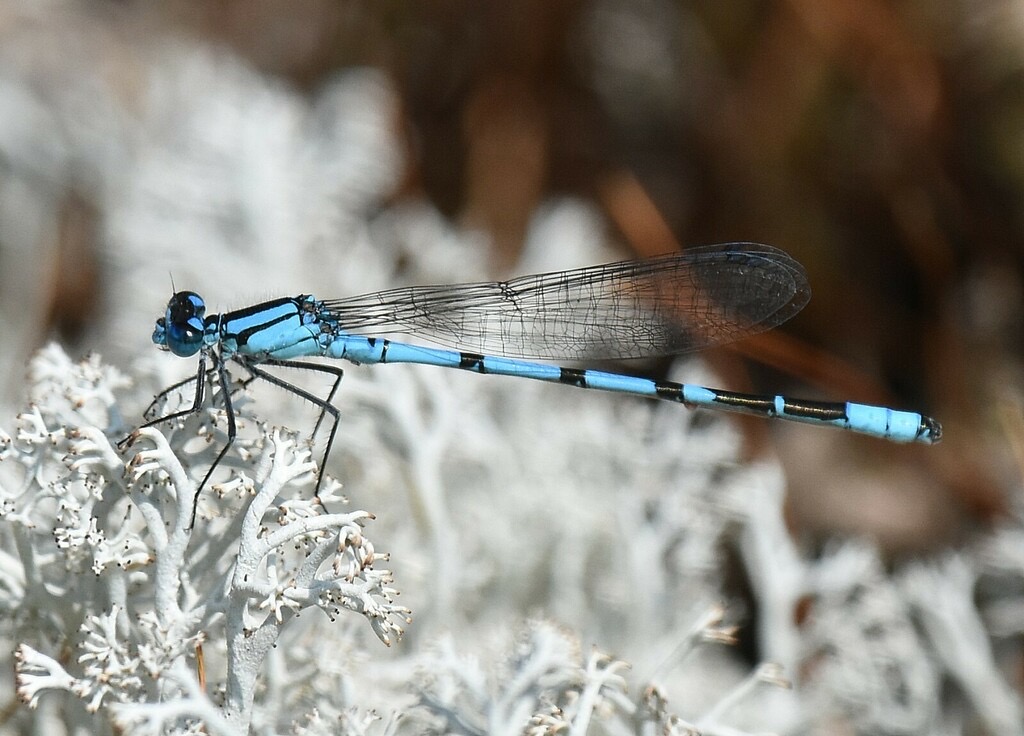
Males are bright blue with black abdominal markings; close separation from Northern Bluet often requires the male terminal appendages or a carefully angled macro image.
Blue-and-black body pattern is not enough where Northern Bluet overlaps. The male terminal appendages viewed sharply from the side are the practical field discriminator; ordinary photographs of females may support only Enallagma identification.
03 / Field guide
Documented range
Boreal Bluet ranges from Alaska, the Northwest Territories and Labrador south to Durango, Iowa and West Virginia. It is a northern species with a long montane extension into the West.
Documented Southwest occurrence is concentrated at cool or higher-elevation water in Arizona, California, Colorado, New Mexico, Nevada and Utah; Texas evidence is exceptional and should not be generalized.
04 / Field guide
Habitat & flight period
Cool ponds, marshes, boggy lakeshores and slow northern waters with abundant emergent vegetation.
A summer species at most southwestern mountain sites, appearing after waters warm and disappearing well before lowland flight seasons end.
05 / Field guide
Finding strategy
Search sedge edges on calm, sunny mornings and document the terminal abdomen from the side and above whenever Boreal and Northern Bluets may coexist.
Look along sedge margins of cool ponds, boggy lakeshores and quiet mountain water during the local summer. Make the appendage image before a wider habitat portrait, because a beautiful dorsal frame may not settle the identification.
06 / Field guide
Similar species
Northern Bluet is the central identification problem. Color pattern alone is often insufficient; use appendage structure, locality and expert review.
07 / Field guide
Photography in the field
Choose a side-on perch and maximize depth of field enough to render both the thorax and terminal appendages sharply.
Protect the water edge, keep a working distance, and leave the insect and its perch as found.
Research standard
Sources & field references
- iNaturalist taxon and research observations — Enallagma boreale
- Odonata Central — North American records, taxonomy and flight data
- Dragonfly Society of the Americas — 2024 North American checklist
Access, fees, closures and regulations can change quickly. Confirm practical details with the managing agency before travel.