02 / Field guide
Identification
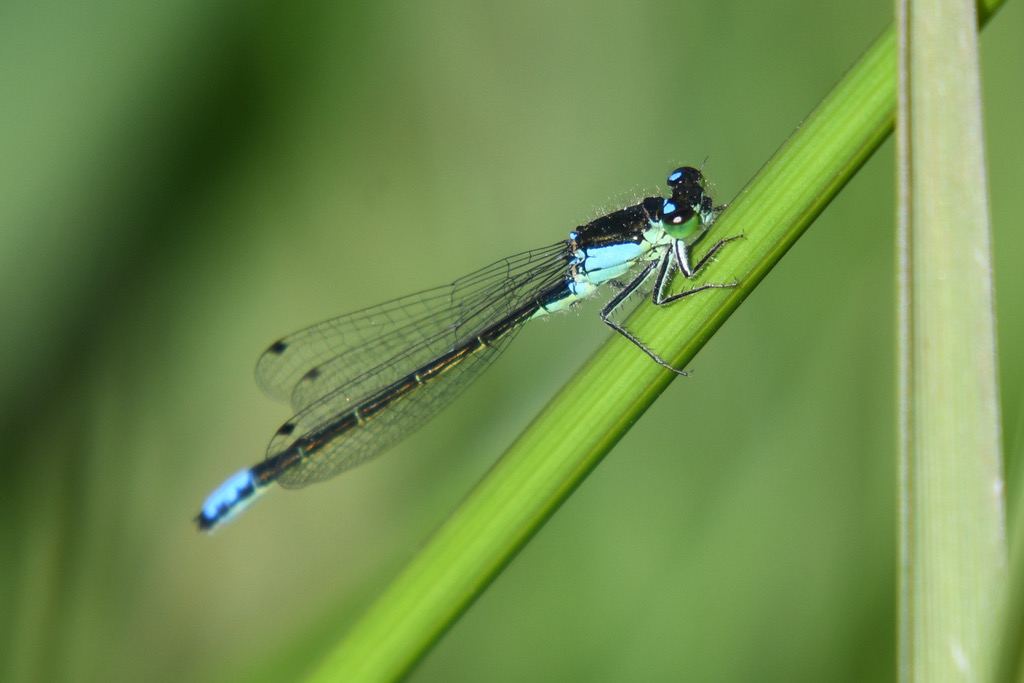
A tiny dark forktail with green thoracic markings and blue near the abdominal tip; close structural examination separates it from Pacific Forktail.
Males show iridescent black, green and blue; females can appear gold. Pacific Forktail is widespread nearby and very similar, so a photograph of the male terminal structures and expert confirmation may be needed.
03 / Field guide
Documented range
The checklist lists San Francisco Forktail only in California. National Park Service reporting describes a historical range from San Mateo to Marin Counties and a present stronghold in the Presidio.
This is a San Francisco Bay Area endemic, not a statewide California generalist and not an interior Southwest species. Current access and conservation guidance should lead any visit.
04 / Field guide
Habitat & flight period
Year-round freshwater seeps, seep-fed pools and streams with open water and sparse emergent vegetation in a narrow coastal setting.
NPS documents repeating adult generations from March through November, supported by aquatic nymphs over winter.
05 / Field guide
Finding strategy
Use current conservation and access information, stay on established paths and document precise structural characters without disturbing seep vegetation.
NPS describes adults over year-round freshwater seeps and streams from March through November, with open, sparsely vegetated seep water important at the Presidio. Do not describe the habitat as brackish: saltwater intrusion, drought and loss of year-round water are threats, not habitat preferences.
06 / Field guide
Similar species
Pacific Forktail is widespread in the same region and can look extremely similar. Expert confirmation may be needed for photographs lacking appendage detail.
07 / Field guide
Photography in the field
A long close-focusing lens is preferable in sensitive habitat; obtain a side view of the abdominal tip before attempting an artistic frame.
Protect the water edge, keep a working distance, and leave the insect and its perch as found.
08 / Field guide
Conservation & field considerations
The species' remaining populations are small and actively managed. Remain on established routes, do not enter seep vegetation, and never publish a precise micro-location beyond current agency guidance.
Research standard
Sources & field references
- iNaturalist taxon and research observations — Ischnura gemina
- Odonata Central — North American records, taxonomy and flight data
- Dragonfly Society of the Americas — 2024 North American checklist
- National Park Service — Rare Damselflies in Distress
Access, fees, closures and regulations can change quickly. Confirm practical details with the managing agency before travel.