02 / Field guide
Quick identification
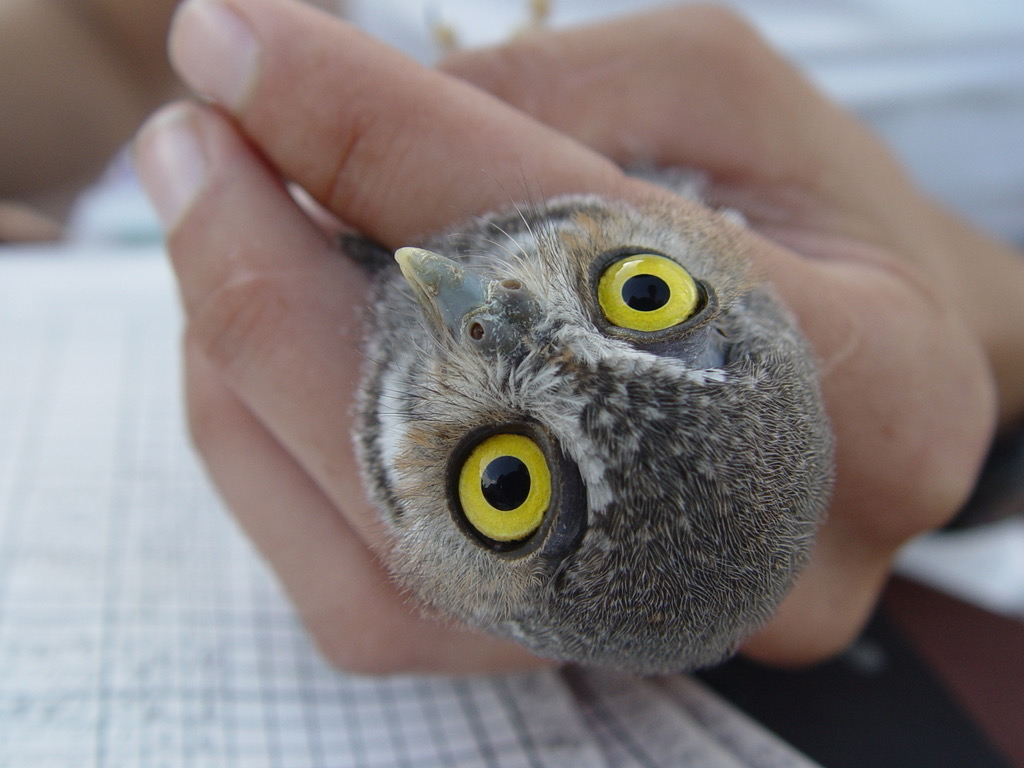
Tiny, short-tailed and round-headed with no ear tufts, pale eyebrows and yellow eyes. Size is striking only when a nearby object provides scale.
Confirm the whole animal and context rather than a single color patch. Age, sex, molt, distance and light can all change apparent pattern.
03 / Field guide
Range & habitat
Summer breeder in southern Arizona, southwestern New Mexico and west Texas; more widespread in Mexico and migratory in the northern range.
Sonoran Desert with mature saguaros, riparian woodland, oak canyons and other habitats containing abandoned woodpecker cavities.
Use current observations to confirm broad seasonal presence, then check access with the land manager. A mapped record is not an invitation onto private or restricted ground.
04 / Field guide
Behavior
Emerges around dusk to hunt insects and other small prey. Calls include a rapid series of yelps or chuckles; birds often call from inside or near a cavity.
Behavior is useful evidence only when combined with structure and plumage or body pattern. Give the animal enough space to continue feeding, resting or traveling normally.
05 / Field guide
How to find it
Learn the voice, arrive before dark and stay on public trails. Use red or dim light only for footing, keep recordings restrained and never illuminate or approach an occupied cavity.
Keep the search habitat-led. Recent reports can focus effort, but they should not encourage crowding, trespass or repeated disturbance.
06 / Field guide
Similar species
Western Screech-Owl is much larger with ear tufts; Northern Pygmy-Owl is also larger, active by day and differently patterned.
When a view is incomplete, record the characters you actually saw and leave room for uncertainty. Photographs, date, location and habitat make later review possible.
07 / Field guide
Photography in the field
Nocturnal photography can cause disproportionate disturbance. Favor ambient twilight at a natural perch, high ISO and modest shutter speed; avoid repeated flash and all nest-cavity setups.
Settings are starting points. Subject welfare, legal access and a safe working distance take priority over focal length or frame-filling composition.
Research standard
Sources & field references
- Cornell Lab — Elf Owl
- Arizona-Sonora Desert Museum — Elf Owl
- Audubon Field Guide — Elf Owl
- iNaturalist source photograph taxon — Micrathene whitneyi
Access, fees, closures and regulations can change quickly. Confirm practical details with the managing agency before travel.