02 / Field guide
Quick identification
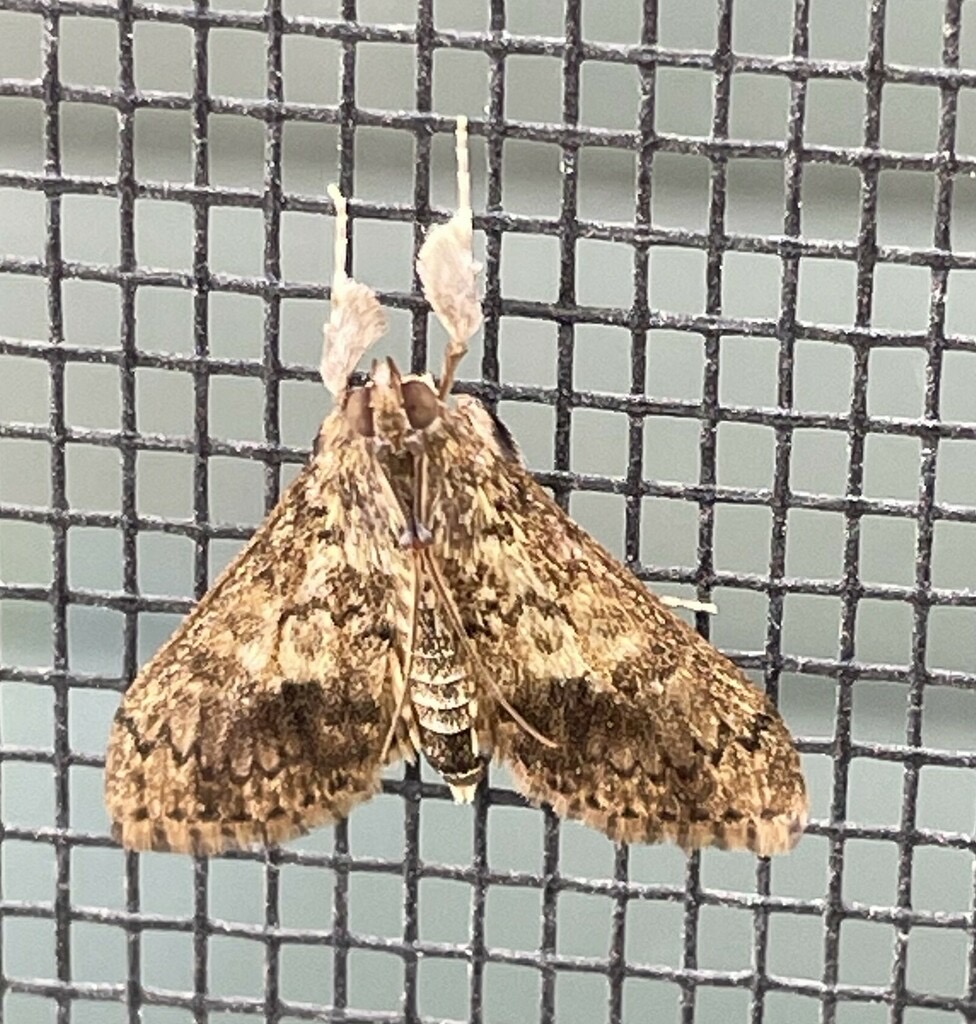
Adults are small brown-and-cream moths with angular wing markings. The greenish larvae web or fold leaves and feed within the shelter.
Confirm the whole animal and context rather than a single color patch. Age, sex, molt, distance and light can all change apparent pattern.
03 / Field guide
Range & habitat
Recorded from the southern United States through the Caribbean and tropical Americas; local occurrence follows climate and host availability.
Gardens, tropical scrub and disturbed lowlands with bougainvillea or other suitable larval host plants.
Use current observations to confirm broad seasonal presence, then check access with the land manager. A mapped record is not an invitation onto private or restricted ground.
04 / Field guide
Behavior
Adults are nocturnal and may visit light; larvae are easier to detect through fresh leaf feeding, webbing and folded foliage.
Behavior is useful evidence only when combined with structure and plumage or body pattern. Give the animal enough space to continue feeding, resting or traveling normally.
05 / Field guide
How to find it
Inspect damaged leaves in daylight without removing the shelter. Photograph adult wing pattern and larval host association, and distinguish a record from a horticultural diagnosis.
Keep the search habitat-led. Recent reports can focus effort, but they should not encourage crowding, trespass or repeated disturbance.
06 / Field guide
Similar species
Many small crambid moths share a pale zigzag pattern. Host plant supports an identification but does not replace adult or larval morphology.
When a view is incomplete, record the characters you actually saw and leave room for uncertainty. Photographs, date, location and habitat make later review possible.
07 / Field guide
Photography in the field
Use diffuse close light, keep the moth on its natural surface and photograph both dorsal wing pattern and scale. Do not chill or reposition an animal for the frame.
Settings are starting points. Subject welfare, legal access and a safe working distance take priority over focal length or frame-filling composition.
Research standard
Sources & field references
- iNaturalist — Asciodes gordialis
- Mississippi State University — Moth Photographers Group species record
- BugGuide — Asciodes gordialis
- iNaturalist source photograph taxon — Asciodes gordialis
Access, fees, closures and regulations can change quickly. Confirm practical details with the managing agency before travel.