02 / Field guide
Identification
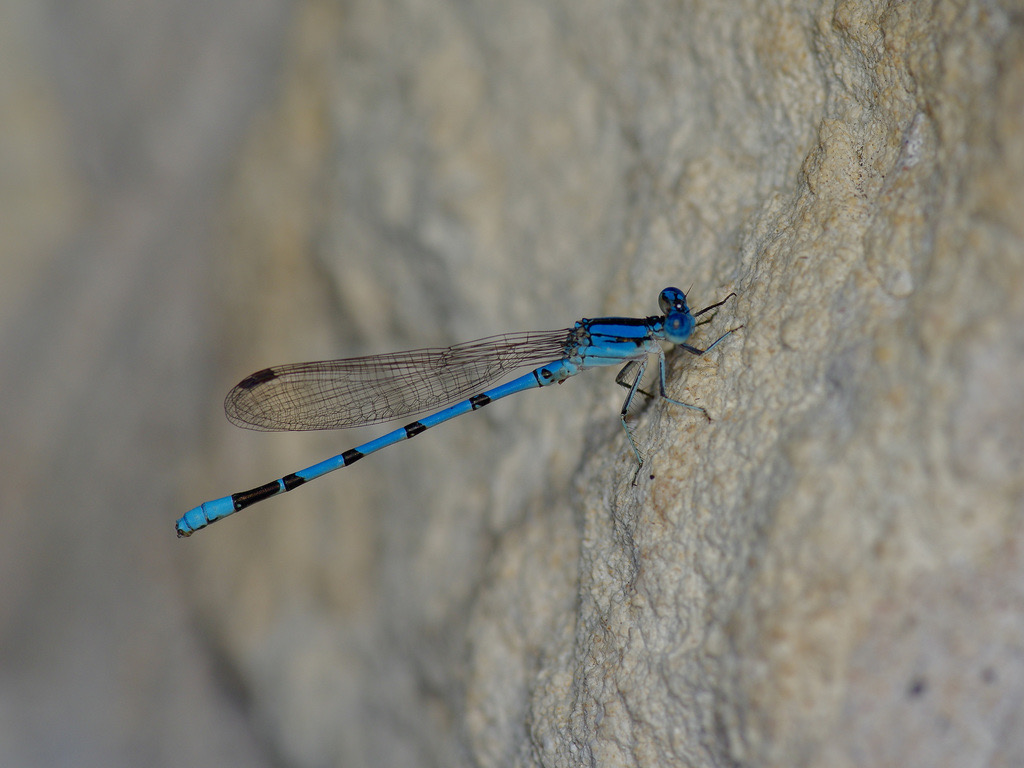
Adult males are blue to violet with black patterning, pale shoulder stripes and distinctive terminal segments; females are subdued gray-brown, blue or violet.
Adult males combine blue to violet areas with black dorsal markings; females and immature males may be tan, gray-blue or subdued violet. Photograph the pale shoulder stripes, the pattern through abdominal segments eight to ten and the appendages when other blue Argia share the stream.
03 / Field guide
Documented range
Aztec Dancer ranges from Oregon and Nebraska south to Oaxaca according to the 2024 checklist. Its U.S. distribution spans much more of the West and southern interior than its name suggests.
Verified occurrence is widespread through the Southwest, including Arizona, California, Colorado, New Mexico, Nevada, Texas and Utah. Local presence still depends on flowing water rather than state boundaries.
04 / Field guide
Habitat & flight period
Rocky streams and rivers from desert foothills into wooded canyons, usually with current, open landing sites and nearby shrubs.
Most readily encountered in the warm months, with low-elevation flights beginning earlier and extending later than mountain populations.
05 / Field guide
Finding strategy
Pause at riffles, boulders and exposed roots. Males make short patrols along the bank and often settle where current meets a calmer edge.
At rocky streams, pause where a riffle opens into a quieter edge and watch boulders, exposed roots and low bank twigs. A territorial male often returns to the same landing point, providing a better diagnostic view than a chase along the bank.
06 / Field guide
Similar species
Amethyst and Lavender Dancers may look close in variable light. Use the full thoracic and abdominal pattern, not a single shade of blue.
07 / Field guide
Photography in the field
Expose for the pale blue segments and wait for a bank-parallel perch that keeps the long abdomen within the focus plane.
Protect the water edge, keep a working distance, and leave the insect and its perch as found.
Research standard
Sources & field references
- iNaturalist taxon and research observations — Argia nahuana
- Odonata Central — North American records, taxonomy and flight data
- Dragonfly Society of the Americas — 2024 North American checklist
Access, fees, closures and regulations can change quickly. Confirm practical details with the managing agency before travel.