02 / Field guide
Identification
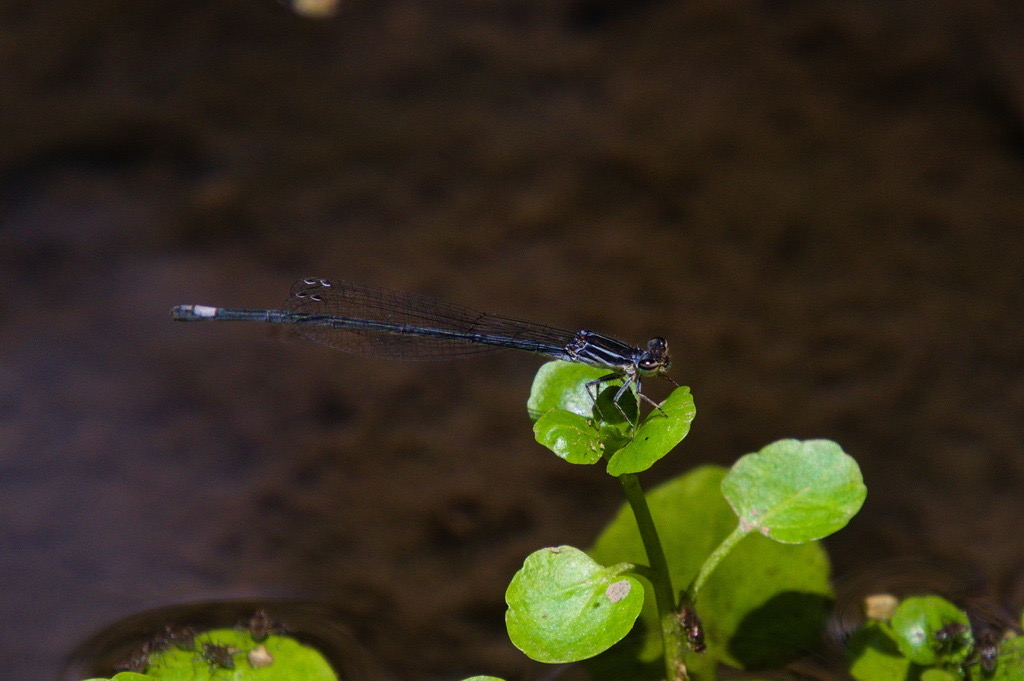
A compact black-and-cream damselfly; males show pale terminal abdominal segments and bold thoracic contrast rather than the extensive blue of many bluets.
Males look black and cream rather than extensively blue, with a pale abdominal tip and bold thoracic contrast. Because small forktails and teneral bluets can appear similarly pale, document body proportions, thorax, face and terminal segments in the same encounter.
03 / Field guide
Documented range
The checklist places Black-and-White Damsel from Arizona south to Nicaragua. Within the United States, Arizona is the only state explicitly supported by that range treatment.
Arizona records are at the extreme northern edge. A handful of unvouchered or community-identified reports elsewhere in the Southwest should be handled as exceptional claims, not used to broaden the guide's range.
04 / Field guide
Habitat & flight period
Quiet pools, marshy seeps and vegetated pond margins in warm lowlands, often close to dense cover.
Warm-season occurrence is most likely, but irregular U.S. records should be evaluated against current regional data rather than a fixed calendar.
05 / Field guide
Finding strategy
Search slowly inside low vegetation at sheltered water rather than watching only the open surface. Photograph multiple angles and the terminal abdomen.
Search sheltered, low vegetation around warm pools, marshy seeps and quiet pond edges in documented Arizona range. The insect can remain inside cover below the obvious flight line, so scan slowly rather than sweeping only open water.
06 / Field guide
Similar species
Small forktails and teneral bluets can create a first impression of black and pale. Size, thoracic pattern and abdominal tip separate them.
07 / Field guide
Photography in the field
A diffused flash can restore detail in deep vegetation, but keep power low and avoid repeated disturbance of a scarce insect.
Protect the water edge, keep a working distance, and leave the insect and its perch as found.
Research standard
Sources & field references
- iNaturalist taxon and research observations — Apanisagrion lais
- Odonata Central — North American records, taxonomy and flight data
- Dragonfly Society of the Americas — 2024 North American checklist
Access, fees, closures and regulations can change quickly. Confirm practical details with the managing agency before travel.