02 / Field guide
Quick identification
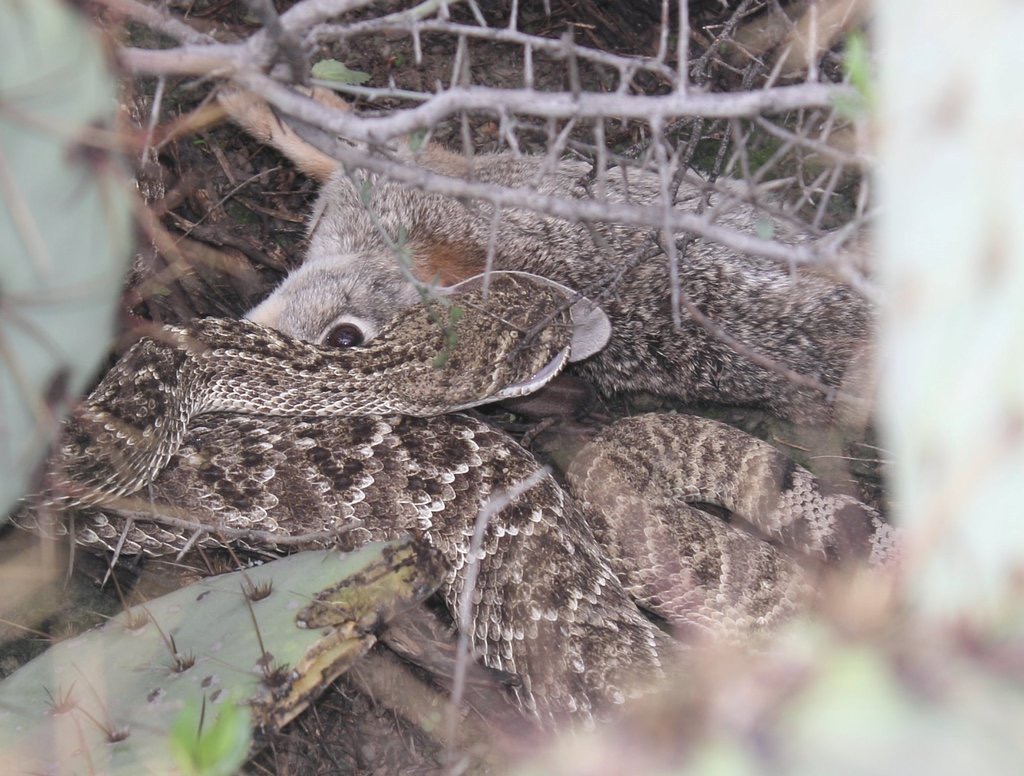
Heavy-bodied with dark diamond-shaped dorsal blotches, a broad triangular head and bold black-and-white rings immediately before the rattle.
Confirm the whole animal and context rather than a single color patch. Age, sex, molt, distance and light can all change apparent pattern.
03 / Field guide
Range & habitat
The southwestern United States and northern Mexico, from central Texas west through New Mexico and Arizona into southeastern California.
Desert scrub, grassland, rocky foothills, washes and agricultural edges from lowlands into moderate elevations.
Use current observations to confirm broad seasonal presence, then check access with the land manager. A mapped record is not an invitation onto private or restricted ground.
04 / Field guide
Behavior
Usually avoids confrontation, relying on camouflage and retreat. It may bask in cool weather, cross roads after warm evenings or shelter in rock and rodent burrows.
Behavior is useful evidence only when combined with structure and plumage or body pattern. Give the animal enough space to continue feeding, resting or traveling normally.
05 / Field guide
How to find it
Stop well outside striking range, keep pets and companions back, never block the snake’s route, and allow it to move away. Do not use sticks, hooks or vehicles to reposition it.
Keep the search habitat-led. Recent reports can focus effort, but they should not encourage crowding, trespass or repeated disturbance.
06 / Field guide
Similar species
Mojave Rattlesnake often has a lighter tail-ring pattern and different dorsal proportions, but pattern varies; geographic and expert review may be needed.
When a view is incomplete, record the characters you actually saw and leave room for uncertainty. Photographs, date, location and habitat make later review possible.
07 / Field guide
Photography in the field
Use a long lens from several body lengths away, kneel only after checking the surrounding ground and avoid low angles that reduce situational awareness. No image justifies approaching a coiled or cornered snake.
Settings are starting points. Subject welfare, legal access and a safe working distance take priority over focal length or frame-filling composition.
Research standard
Sources & field references
- Arizona-Sonora Desert Museum — Western Diamond-backed Rattlesnake
- National Park Service — Rattlesnake safety
- iNaturalist — Crotalus atrox
- iNaturalist source photograph taxon — Crotalus atrox
Access, fees, closures and regulations can change quickly. Confirm practical details with the managing agency before travel.